
Research Report on the Construction of Low‑Altitude Emergency Rescue System: Integrated Development of Aircraft, Take‑off‑and‑Landing Nodes and Scheduling Platform Author Affiliations: Buckhouse Intelligent Technology (Suzhou) Co., Ltd., Buckhouse Low‑Alt
Research on Commercial Promotion Bottlenecks of Heavy‑lift Cargo UAVs and the Construction of Low‑altitude Logistics Network System
Authors: buckhouse Intelligent Technology (Suzhou) Co., Ltd., buckhouse Low‑Altitude Economy Research Institute, buckhouse Global Low‑Altitude Economy Industry Network, buckhouse China Low‑Altitude Economy Industry Network, buckhouse International Low‑Altitude Economy Cooperation Network, buckhouse Low‑Altitude Manufacturing Platform, buckhouse Low‑Altitude Flight Platform, buckhouse Low‑Altitude Support Platform, buckhouse Low‑Altitude Infrastructure Platform, buckhouse Low‑Altitude Industry Supporting Platform, buckhouse Low‑Altitude Cross‑border Integration Platform
Abstract
As China’s low‑altitude economy evolves into a national strategic emerging industry, heavy‑lift cargo UAVs, the core carrier equipment for low‑altitude logistics, are accelerating from prototype flight tests and demonstration pilots toward large‑scale commercial operation. Distinct from consumer‑grade and light‑weight last‑mile delivery UAVs, heavy‑lift cargo UAVs generally refer to composite‑wing transport UAVs, unmanned helicopters and cargo eVTOLs with a payload of over 50 kg. They are applied in feeder‑route transportation, main‑route supplementary delivery, material transportation to islands and plateaus, and emergency material distribution. These vehicles effectively compensate for the shortcomings of traditional land‑ and water‑borne logistics in geographically complex and time‑sensitive scenarios and serve as a critical pillar for building a multi‑level modern logistics system and fostering new‑quality productive forces.
Multiple 100‑kilogram‑class and ton‑level cargo UAV models have completed flight verification in China, and certain pilot routes have achieved regular trial operations. Nevertheless, the industry faces a notable gap between demonstration outcomes and large‑scale commercialization. Profitability on single pilot routes cannot be replicated across network‑based operations. Other restraining factors include high equipment costs, fragmented airspace governance rules, insufficient type‑certification capacity, severe shortages of low‑altitude infrastructure, and immature operation support, insurance risk control and industrial supporting systems. Combined bottlenecks prevent heavy‑lift cargo UAVs from moving beyond demonstration projects to broad commercial deployment.
Based on the realities of China’s low‑altitude logistics industry, this report systematically reviews the development status of the heavy‑lift cargo UAV sector. It analyzes core commercialization bottlenecks across five dimensions: technology and equipment, airspace regulation, infrastructure, business models and industrial ecosystem. A general framework for an integrated trunk‑feeder‑last‑mile low‑altitude logistics network is proposed. Construction pathways are elaborated around six platforms: low‑altitude manufacturing, low‑altitude flight, low‑altitude support, infrastructure, industrial supporting facilities and cross‑border integration. Risk analysis and industrial policy recommendations are provided for policymakers, investment institutions and industrial operators.
Keywords: Heavy‑lift Cargo UAV; Low‑Altitude Logistics; Airspace Management; Low‑Altitude Infrastructure; Commercialization; Network System
1. Introduction
1.1 Research Background
From 2025 to 2026, China issued successive top‑level policies for the low‑altitude economy. The revised Civil Aviation Law of China came into force, supporting implementing rules for the Interim Regulations on Unmanned Aerial Vehicle Flight Management were rolled out, and the Three‑Year Action Plan for Low‑Altitude Economic Development (2025‑2027) prioritized large cargo UAVs as key equipment. Multiple provincial‑level governments introduced subsidies for low‑altitude logistics routes and equipment procurement, opening a critical institutional window for China’s low‑altitude economy. According to Civil Aviation Administration of China (CAAC) estimates, China’s overall low‑altitude‑economy market exceeded RMB 1.5 trillion in 2025, among which the low‑altitude‑logistics segment surpassed RMB 120 billion. Projections place its market size between RMB 450 billion and RMB 605 billion by 2035, signalling substantial long‑term growth potential.
Traditional ground‑based logistics networks rely heavily on highways and railways, suffering from low efficiency, poor accessibility and high costs in plateaus, mountainous regions, archipelagos and disaster‑stricken areas. Featuring vertical take‑off and landing and flexible deployment independent of road infrastructure, heavy‑lift cargo UAVs perform feeder‑route cargo transfer, regular material supply for remote regions, emergency relief delivery and rapid cold‑chain medical transportation, acting as a vital supplement to modern logistics systems.
Globally, Europe, the United States, Singapore and the Middle East have launched heavy‑lift cargo UAV pilot programmes. Overseas enterprises have accumulated experience in long‑range eVTOL R&D and digital air‑traffic management. However, no region has achieved genuine large‑scale commercialization of heavy‑lift cargo UAVs, and the industry remains in the exploratory phase. China boasts a complete UAV industrial chain, huge logistics‑market demand and abundant low‑altitude‑economy pilot scenarios, laying a solid foundation for industrial breakthroughs, while real‑world commercialization obstacles persist.
1.2 Research Significance
Theoretically, existing studies largely focus on light‑weight last‑mile delivery UAVs or purely technical attributes of heavy‑lift cargo UAVs. Systematic research on commercial‑promotion bottlenecks and complete low‑altitude‑logistics‑network architecture remains limited. This report integrates equipment manufacturing, airspace operation, infrastructure, operational services and industrial ecology to improve the theoretical analytical framework for heavy‑lift‑cargo‑UAV‑driven low‑altitude logistics networks.
Practically, numerous enterprises have invested in R&D and pilot operations for heavy‑lift cargo UAVs, yet most projects remain government‑led demonstrations without sustainable commercial closed‑loop models. This report dissects practical bottlenecks and proposes implementable pathways for low‑altitude‑logistics‑network construction. It delivers practical references for enterprise project planning, local‑government low‑altitude‑new‑infrastructure layout and regulatory‑authority industry governance.
1.3 Research Scope and Methodology
This report targets heavy‑lift cargo UAVs with payloads above 50 kg, including composite‑wing unmanned transport aircraft, cargo unmanned helicopters and cargo eVTOLs. Application scenarios cover feeder‑route logistics transfer, island material transport, mountain‑plateau logistics and emergency‑material delivery. Small‑size last‑mile courier UAVs and manned aircraft are excluded.
Research methodologies include policy‑literature analysis, industrial‑case study and industrial‑chain investigation and induction. National and provincial low‑altitude‑economy policies and CAAC air‑worthiness documents are reviewed. Domestic operational heavy‑lift‑UAV‑logistics pilot projects are reviewed. Field‑survey insights are synthesized to identify practical pain points, establish the low‑altitude‑logistics‑network framework and put forward countermeasures and risk warnings.
2. Development Status of the Heavy‑lift Cargo UAV Industry
2.1 Equipment R&D and Iteration
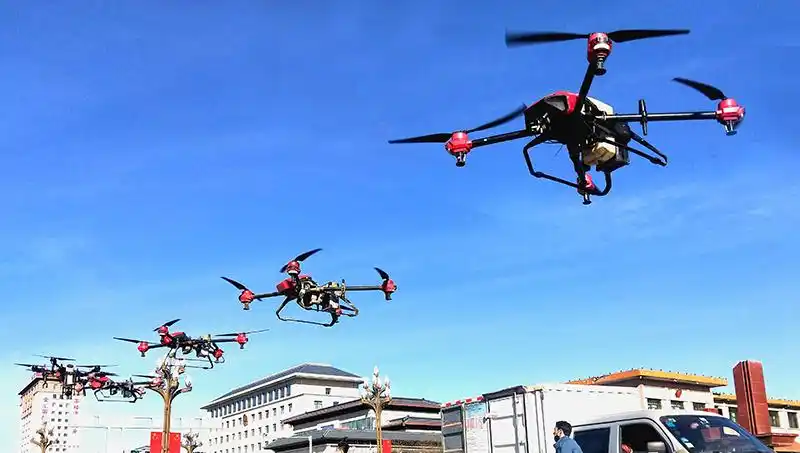
China’s heavy‑lift cargo UAV developers include central‑state‑owned aviation enterprises, leading UAV technology firms and logistics‑platform operators. Payload grades keep expanding from 100‑kilogram‑class toward 500‑kilogram‑class and ton‑level models. The AVIC TP500 unmanned transport aircraft has achieved mass‑production delivery; the Changying‑8 large cargo UAV completed its maiden flight with a maximum payload of 3.5 tons. Logistics variants of the EH216, Verti‑composite‑wing models and United‑Aircraft unmanned helicopters have undergone multi‑scenario flight tests for cold‑chain goods, general cargo, medical supplies and emergency‑material delivery.
Multiple technical routes coexist for power systems. Lithium‑battery technology is relatively mature but constrained by low energy density (250‑300 Wh/kg for mainstream commercial lithium‑ion batteries), limiting flight range. Hydrogen fuel cells deliver high energy density but face high costs for hydrogen production, storage and refuelling. Aviation‑fuel‑powered platforms support heavy payloads and long endurance yet encounter constraints from carbon‑emission and noise‑control requirements.
Air‑worthiness certification is a prerequisite for commercial operation. As of the first half of 2026, CAAC has accepted type‑certification applications for multiple heavy cargo UAVs, while only a small number of models have obtained formal type certificates. Most prototypes remain in experimental‑verification phases. Lengthy air‑worthiness validation cycles and complex test subjects delay mass‑delivery timelines.
2.2 Pilot Application Scenarios
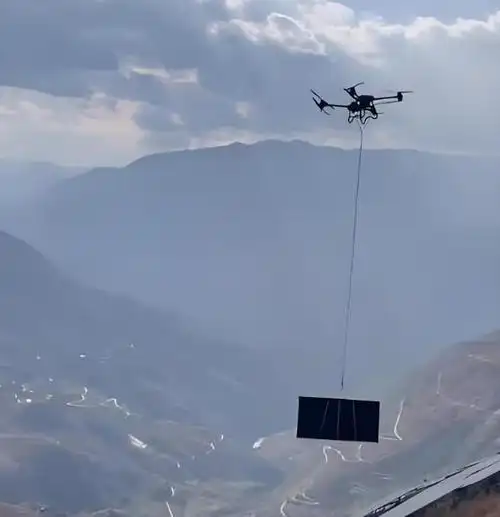
First, regular logistics for remote regions. In geographically inaccessible plateaus, mountainous zones and islands, heavy‑lift UAVs deliver fresh food, medicine and daily necessities. Plateau‑based pilots verify that UAVs materially shorten transportation lead‑times and mitigate safety risks of ground transport under harsh weather.
Second, feeder‑route trans‑shipment pilots between logistics hubs adopt UAV‑based hub‑to‑sub‑node cargo transfer to test “truck‑UAV feeder” air‑ground intermodal workflows. Public pilot data show limited single‑route marginal profitability without cross‑regional network‑scale replication.
Third, emergency‑relief material delivery. When earthquakes, flash floods or geological disasters destroy ground transportation infrastructure, heavy‑lift cargo UAVs rapidly deliver food, medicine and rescue equipment. While this scenario represents rigid demand, its episodic nature cannot sustain regular commercial operations.
Fourth, special industrial‑material transportation for mining sites and large‑scale infrastructure projects delivers engineering components and supplies. High payload requirements and geographical constraints create partial commercial potential.
2.3 Industrial‑chain Landscape
Upstream segments cover structural components, power batteries, flight‑control navigation, obstacle‑perception sensors and communication modules. Midstream participants include complete‑aircraft manufacturers and flight‑operation service providers. Downstream clients comprise logistics enterprises, local emergency‑management authorities, mining operators and cross‑border island‑trade entities.
The industrial chain exhibits rapid growth in hardware manufacturing alongside under‑developed operational services and supporting links. Substantial resources flow into complete‑aircraft R&D, yet take‑off‑and‑landing sites, dedicated UAV communication networks, maintenance systems, professional talent pools and insurance products lag behind equipment iteration, resulting in unbalanced industrial‑chain development.
2.4 Policy Environment
At the national level, the revised Civil Aviation Law establishes the legal foundation for low‑altitude operations. The Interim Regulations on Unmanned Aerial Vehicle Flight Management set fundamental governance institutions. CAAC advances air‑worthiness rules and classified airspace‑management frameworks. At the provincial level, Guangdong, Anhui, Sichuan, Shaanxi, Jiangsu and other provinces have released special low‑altitude‑economy policies, some incorporating equipment‑purchase and route‑operation subsidies for low‑altitude‑logistics pilots.
Nonetheless, policy implementation varies geographically. Approval details, subsidy standards and regulatory enforcement differ across jurisdictions. Cross‑municipal‑border flights face institutional‑alignment challenges, and a unified nationwide operational‑governance system remains incomplete.
3. Core Bottlenecks for Commercial Promotion of Heavy‑lift Cargo UAVs
3.1 Technological and Equipment Bottlenecks
First, fundamental power‑system limitations. Higher payloads come at the cost of reduced flight endurance under lithium‑battery energy‑density constraints. Hydrogen fuel‑cell total‑ownership costs remain high with almost no hydrogen‑refuelling infrastructure. Fuel‑powered models struggle to meet noise‑ and carbon‑emission standards for peri‑urban operations. Unresolved power‑technology constraints limit operational radius and continuous all‑weather long‑distance performance for most heavy‑lift platforms.
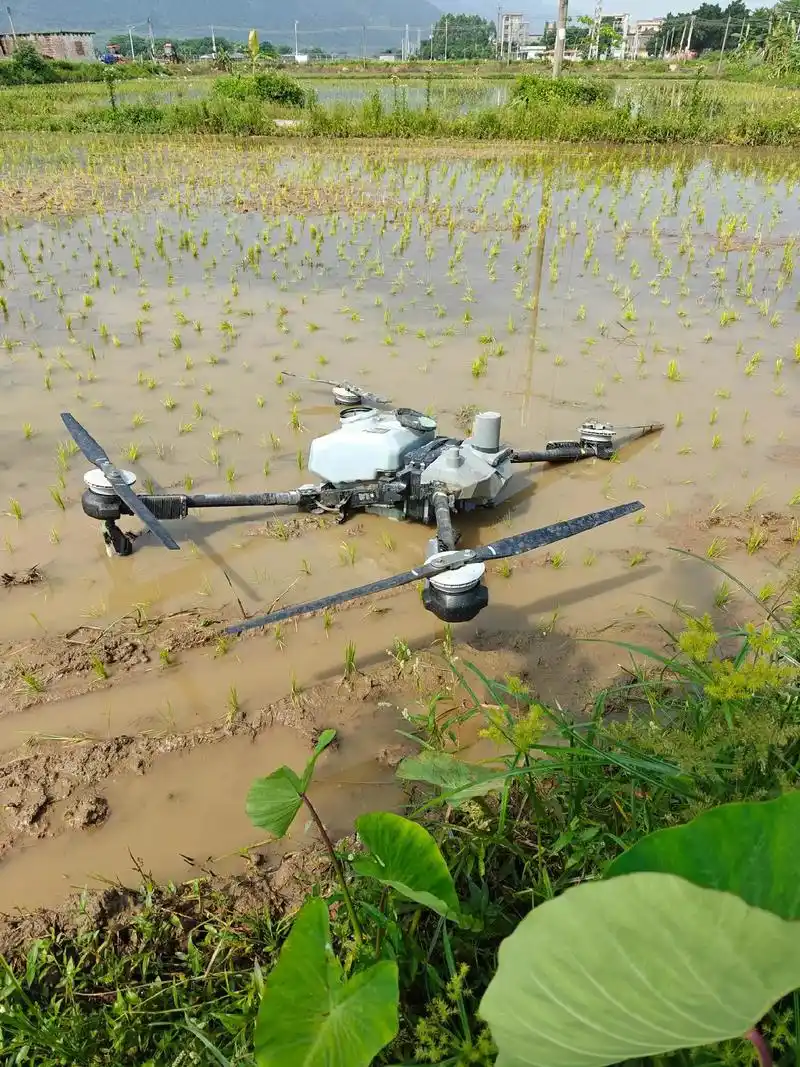
Second, insufficient adaptability to complex environments. Rain, fog and strong cross‑winds impose strict operational limits. Mountain and island settings feature complex electromagnetic environments that interfere with navigation and communication signals. Reliability under extreme meteorological and electromagnetic conditions still requires improvement before 7×24‑hour commercial‑grade performance is achieved.
Third, inadequate air‑worthiness‑certification capacity. As novel aircraft types, heavy‑lift cargo UAVs require extensive, time‑consuming air‑worthiness validation with limited competent‑authority human resources. Many high‑performance prototypes cannot obtain formal type certificates, blocking large‑scale legal commercial operations and delaying mass‑production delivery.
Fourth, high complete‑aircraft and operation‑maintenance costs. Hundred‑kilogram‑class heavy‑lift UAVs cost millions of RMB, and ton‑level models are even more expensive. Ongoing expenditures include battery replacement, periodic inspections, spare‑parts reserves and specialist‑staff salaries. At low flight frequencies, ton‑kilometre costs significantly exceed conventional road‑transport benchmarks, eroding price‑competitiveness.
3.2 Airspace Regulation and Institutional Bottlenecks
Airspace represents the core production factor for low‑altitude logistics and constitutes the biggest commercial‑rollout bottleneck.
Firstly, insufficient refined airspace demarcation. Traditional airspace management is designed for manned aviation. Classified‑layer airspace frameworks tailored for “low‑slow‑large” cargo UAVs are still under construction. Urban and metropolitan‑area low‑altitude resources are tight. Buildings, high‑voltage lines and airport obstacle‑limitation zones generate numerous no‑flight and restricted‑flight zones, fragmenting available air routes.
Secondly, extremely high cross‑regional‑approval coordination costs. Cross‑prefecture‑level routes require multi‑department multi‑level coordination. Standards diverge across cities with limited mutual recognition of qualifications. Most pilots are confined within municipal boundaries. Large‑scale cross‑regional network expansion is restrained by cumbersome approval workflows, creating the paradox of “easy pilots, difficult networking”.
Thirdly, deficiencies in digital air‑traffic‑management capabilities. A nationwide unified low‑altitude‑intelligent‑network has not been fully deployed, causing “blind‑spot” monitoring gaps. Heavy‑lift cargo UAVs are large unmanned aircraft; failures entail high ground‑impact risks, demanding superior situational awareness, conflict‑alarm and emergency‑response capabilities. Communication‑and‑perception‑infrastructure coverage is uneven, with blind zones in high‑rise‑dense urban zones and remote mountainous areas.
Fourthly, incomplete operational‑standard systems. Standards for flight‑crew qualifications, maintenance‑repair specifications, cargo‑loading safety and accident‑response workflows are partially blank or pilot‑phase only. Low‑altitude‑management platforms built by different stakeholders suffer from data silos and poor interoperability.
3.3 Low‑Altitude‑Infrastructure Shortfalls
Low‑altitude‑logistics networks rely not merely on aircraft but integrated systems of take‑off‑and‑landing sites, energy‑replenishment facilities, communication‑perception networks and cargo‑handling terminals. Infrastructure development lags far behind equipment advancement.
First, severe shortages of take‑off‑and‑landing sites. Heavy‑lift‑UAV vertical‑take‑off‑and‑landing sites must satisfy payload‑adaptation, safety‑isolation and fire‑protection requirements distinct from small‑UAV landing pads. Standardized heavy‑lift‑UAV sites are scarce nationwide. Most pilot projects use temporary landing points instead of standardized hub‑and‑relay‑site networks. High construction costs and long payback periods discourage private‑capital investment; government‑only investment cannot sustain nationwide‑network deployment.
Second, missing energy‑replenishment infrastructure. Fast‑battery‑swap stations and hydrogen‑refuelling stations are barely deployed for heavy‑lift UAVs. Large‑volume‑and‑weight batteries require lengthy on‑site charging, lowering vehicle turnover efficiency.
Third, inadequate air‑ground‑intermodal connection facilities. Automated loading‑and‑unloading interfaces between UAV sites and ground‑logistics warehouses‑and‑sorting centres are absent. Manual cargo transfer reduces throughput and increases operational error risks incompatible with high‑frequency commercial‑grade operations.
Fourth, uneven coverage of communication‑perception new‑infrastructure. 5G‑A integrated‑sensing base‑stations and low‑altitude‑detection radars are concentrated in a small number of pilot cities. Most counties, mountainous regions and islands lack supporting hardware for regular heavy‑lift‑UAV operations.
3.4 Business‑model and Cost‑return Bottlenecks
First, single‑route profitability does not equal network‑level profitability. Many demonstration projects achieve positive returns on fixed short‑distance routes. Once multi‑node network‑scale operations are deployed, aggregate costs for site construction, airspace coordination, manpower and spare‑parts stockpiles surge. Marginal costs fail to decline with scale, network‑effect gains remain elusive, and operators encounter the phenomenon of “profitable single‑route flights, unprofitable multi‑node networks”.
Second, insufficient effective business density. Heavy‑lift cargo UAVs require high daily flight frequencies and cargo‑loading rates to amortize depreciation and maintenance expenses. Stable large‑volume‑cargo demand is absent in most regions; many pilot‑route operations rely on government subsidies, with insufficient market‑driven orders.
Third, imperfect risk‑guarantee systems. Specialized‑insurance‑product supply for heavy‑lift cargo UAVs is limited. Premiums for hull insurance, cargo‑loss insurance and third‑party‑liability insurance are high, further inflating operating costs. Accident‑liability‑definition and loss‑adjustment mechanisms remain ambiguous, exposing commercial operators to substantial risk‑exposure.
Fourth, misaligned market positioning. Some projects attempt to substitute heavy‑lift UAVs for ordinary express‑delivery services and compete directly against low‑cost mature road‑freight, placing UAVs at a cost disadvantage. Their true competitive advantage lies in high‑time‑value scenarios where ground‑transport costs are prohibitive. Such niche‑market volumes are limited and demand precise market‑exploration rather than simple replication of conventional‑logistics patterns.
3.5 Industrial‑ecosystem and Societal Bottlenecks
First, severe shortage of multidisciplinary professionals. Heavy‑lift‑cargo‑UAV operations demand cross‑talents covering aircraft maintenance, airspace‑application scheduling, logistics‑operation management and emergency‑safety response. Industry‑training systems are immature, and talent supply cannot keep pace with industrial expansion.
Second, partial supply‑chain vulnerabilities. Certain high‑end flight‑control components and high‑energy‑density‑battery‑materials rely on external sources, creating potential supply‑chain‑stability risks. Universal‑component standards are lacking; interoperability across‑vendor equipment is poor, raising long‑term‑maintenance costs.
Third, societal‑acceptance constraints. Heavy‑lift aircraft generate considerable noise, triggering public concerns in peri‑urban‑operating contexts. Crash incidents could damage overall‑industry public opinion. Public safety‑perception regarding low‑altitude‑cargo transportation remains under development, forming implicit societal‑acceptance constraints.
Fourth, insufficient cross‑stakeholder collaboration. Mature coordination mechanisms are absent among logistics companies, aircraft manufacturers, air‑traffic‑management authorities and local governments. Manufacturers excel in hardware but lack logistics‑operation insights; logistics enterprises understand cargo flows yet lack aircraft‑operation‑management expertise. Insufficient cross‑domain integration impedes viable‑business‑model validation.
4. Overall Architectural Design of the Low‑Altitude Logistics Network System
A heavy‑lift‑cargo‑UAV low‑altitude logistics network is far more than an aggregation of aircraft. It represents a sophisticated tightly‑coupled system integrating airspace resources, aircraft equipment, low‑altitude infrastructure, operation‑scheduling platforms, logistics‑business systems and industrial‑support ecosystems. This report proposes an integrated trunk‑feeder‑last‑mile air‑ground‑collaborative low‑altitude logistics‑network underpinned by six platforms: low‑altitude manufacturing, low‑altitude flight, low‑altitude support, low‑altitude infrastructure, low‑altitude‑industry supporting and low‑altitude cross‑border‑integration platforms, together with a three‑tier node architecture of hub‑relay‑terminal.
4.1 Overall System‑construction Objectives
Guiding principles: safety priority, scenario‑driven deployment, phased implementation and air‑ground synergy. Short‑term objective: complete pilot‑network construction in priority‑scenario regions, replicable commercial low‑altitude‑logistics demonstration networks in plateaus, islands and large‑scale mining‑areas to validate cost‑benefit models. Medium‑term objective: build cross‑prefectural‑regional low‑altitude‑logistics networks with improved standards, infrastructure, insurance and talent‑support systems. Long‑term objective: establish a nationwide multi‑level low‑altitude‑logistics backbone network as an organic component of China’s modern logistics system, complementary to highway, railway and air‑cargo transportation.
The system shall balance commercial‑value and public‑value objectives, supporting market‑oriented‑logistics services while reserving capacity for disaster‑emergency relief and livelihood‑security missions.
4.2 Network Hierarchy: Three‑tier Hub‑Relay‑Terminal Node Architecture
1. Low‑Altitude‑Logistics Hub Nodes
As network cores, hubs are deployed near comprehensive‑logistics parks and airports. They integrate large‑scale heavy‑lift‑UAV take‑off‑and‑landing fields, warehousing‑and‑sorting facilities, maintenance‑and‑repair centres, energy‑replenishment stations and dispatch‑command centres. Hubs undertake large‑scale cargo consolidation‑and‑distribution, aircraft maintenance‑and‑overhaul and multi‑route scheduling. They interface with conventional highway‑and‑air‑cargo main‑networks to enable large‑scale air‑ground cargo transfer.
2. Relay‑Transshipment Nodes
Positioned between hubs and terminals, relay nodes provide transit‑replenishment functions with medium‑sized landing‑fields, battery‑swap/hydrogen‑refuelling capacity, simple maintenance and temporary warehousing. They extend aircraft operational radius and enable cross‑regional relay‑flight operations, representing key enablers of network‑scale deployment. Prioritized deployment covers island‑chains and plateau‑urban‑agglomerations.
3. Terminal‑operation Nodes
Terminal nodes serve townships, island‑villages and mining‑sites via small‑and‑medium‑sized landing‑points for cargo receiving‑and‑distribution connected to last‑mile‑distribution systems. Terminals do not require large‑scale‑maintenance capability; core functions cover cargo‑handling and basic security protection.
The three‑tier nodes cannot operate in isolation. They must connect with ground‑warehousing and highway‑transport networks to complete the full‑link workflow of “truck‑UAV‑local distribution”, implementing air‑ground intermodalism rather than isolated UAV‑only closed‑loop systems.
4.3 Functional Positioning of the Six Supporting Platforms
4.3.1 Low‑Altitude Manufacturing Platform
Focusing on the equipment‑supply side, this platform promotes high‑quality‑development of the heavy‑lift‑cargo‑UAV industrial chain. Core tasks: drive iterative optimization of heavy‑lift‑payload aircraft; prioritize R&D of high‑safety long‑life power systems and complex‑environment‑perception‑and‑obstacle‑avoidance equipment; advance domestic‑substitution and universal‑component‑standardization to reduce complete‑aircraft and spare‑parts costs; coordinate with air‑worthiness‑certification workflows to promote type‑certification and mass‑production of mature models; establish complete‑aircraft‑and‑component test‑verification systems to enhance equipment reliability and reduce fault‑and‑accident probabilities at source.
4.3.2 Low‑Altitude Flight Platform
Serving as the operational nerve centre of the network, it incorporates a full‑domain digital‑scheduling system, flight‑mission‑management system, conflict‑detection and emergency‑response system. Core functions: unified fleet‑mission management, route‑planning coordination, docking with the low‑altitude‑intelligent‑network, flight‑mission filing, situation monitoring, conflict‑early‑warning and fault‑emergency‑dispatching; support heterogeneous multi‑vendor‑aircraft access to break data silos; implement priority‑scheduling for commercial‑cargo and emergency‑relief missions balancing commercial‑operation and public‑emergency‑support requirements. The platform maintains regulatory‑authority‑data‑interfaces for traceable and supervisable operational‑data.
4.3.3 Low‑Altitude Support Platform
Focused on full‑process safety risk‑control, it includes aircraft‑operation‑and‑maintenance assurance, flight‑safety‑management, accident‑emergency‑disposal and risk‑insurance‑service modules. It establishes standardized maintenance‑repair workflows for full‑life‑cycle aircraft‑health‑management; builds graded fault‑emergency‑response plans; promotes innovative heavy‑lift‑UAV‑specific insurance products and improves accident‑loss‑adjustment and liability‑delimitation mechanisms; maintains a safety‑incident database for iterative updating of safety‑control rules.
4.3.4 Low‑Altitude Infrastructure Platform
It orchestrates physical‑network construction. Responsibilities include overall layout‑planning for hub‑relay‑terminal three‑tier landing‑nodes; deployment of battery‑swap and hydrogen‑refuelling energy‑replenishment facilities; construction of low‑altitude integrated‑communication‑and‑sensing networks; development of automated UAV‑ground‑logistics loading‑and‑unloading terminals. It explores diversified‑investment‑and‑financing models to resolve high‑investment‑long‑payback‑cycle infrastructure challenges, advocating government‑guidance, social‑capital participation and joint‑construction‑and‑sharing by operators to avoid redundant‑construction and site‑idleness.
4.3.5 Low‑Altitude Industry Supporting Platform
It improves soft‑environment conditions for industrial‑development. It develops industry‑talent‑training and assessment‑systems covering maintenance‑work, scheduling and operational‑management posts; promotes industry‑standard compilation to unify specifications for cargo‑loading, site‑construction, data‑interfaces and maintenance‑repair; delivers industrial‑public‑services including supply‑demand‑matching and test‑verification services; establishes industrial‑statistical‑monitoring systems tracking operational‑data of heavy‑lift low‑altitude‑logistics industries.
4.3.6 Low‑Altitude Cross‑border Integration Platform
It bridges low‑altitude logistics and real‑economy‑scenarios. It connects modern supply‑chains, emergency‑management, plateau‑and‑island‑livelihood‑support, mining‑industry and cross‑border‑trade‑scenarios to unlock stable real‑world‑business‑orders; facilitates multi‑stakeholder collaboration among logistics‑enterprises, aircraft‑manufacturers and government‑regulatory‑bodies; conducts international‑industrial‑exchanges drawing‑on global low‑altitude‑logistics‑pilot‑experience and participates in international‑standard‑discussions.
4.4 Network‑operation Logic
The low‑altitude‑flight‑scheduling‑platform acts as the operational nerve centre, with three‑tier physical‑nodes as the structural backbone and coordinated operations across the six platforms. Business‑orders originate from real‑economy‑end‑users. The scheduling‑platform allocates aircraft and computes routes according to cargo weight, distance, meteorological‑conditions and airspace status. Aircraft perform cargo‑transfer missions between hub‑relay‑terminal nodes. The infrastructure‑platform delivers energy‑replenishment and cargo‑handling services. The low‑altitude‑support‑platform continuously monitors safety risks. The manufacturing‑platform iterates equipment performance. The industry‑supporting‑platform provides talent‑and‑standard guarantees. The cross‑border‑integration‑platform expands business‑scenarios. The whole system enables regular commercial‑cargo‑operations while reserving interfaces for rapid‑priority‑switching to emergency‑material‑delivery missions amid disasters.
5. Implementation Pathways for Heavy‑lift Cargo UAV Commercialization and Network‑system Construction
5.1 Phased Network‑construction, Avoid Blind Large‑scale Site‑deployment
Phase 1: Scenario‑oriented pilot‑validation period. Prioritize geographically‑disadvantaged scenarios such as archipelagos, remote plateaus and large‑scale mining‑areas. Build simplified hub‑relay‑terminal small‑scale networks. Prioritize validating real‑world‑business‑orders, cost‑benefit‑models and accumulating practical experience in site‑construction, airspace‑coordination and safety‑disposal to develop replicable demonstration templates. Avoid premature nationwide‑network‑expansion and idle‑infrastructure risks.
Phase 2: Regional‑network‑expansion period. Based on validated demonstration templates, expand to suitable urban‑agglomerations and cross‑provincial‑adjacent‑regions. Optimize three‑tier‑node layouts, promote inter‑local‑government‑airspace‑rule coordination and realize regular cross‑municipal‑route‑operations. Gradually scale‑up fleets, improve business‑density to reduce unit‑operating‑costs and complete local‑insurance‑talent‑maintenance supporting‑systems.
Phase 3: Maturity of nationwide multi‑level‑networks. Inter‑connected regional‑networks form a nationwide low‑altitude‑logistics‑node matrix deeply integrated within China’s comprehensive‑three‑dimensional‑transport‑network, establishing a stable emerging‑logistics‑industry format.
5.2 Technology‑and‑equipment: Address Weaknesses and Improve Air‑worthiness‑supply
For power‑technology, advance multi‑route iterative‑development: enhance lithium‑battery safety‑and‑energy‑density while advancing engineering‑level deployment of hydrogen‑fuel‑cells for heavy‑lift‑payload aircraft. Strengthen R&D for reliability under complex‑meteorological‑and‑electromagnetic‑environments, improving wind‑and‑fog‑resistance toward all‑weather operational capability.
The industry shall promote universal‑component‑standardization to reduce cross‑vendor‑technical‑barriers and lower long‑term‑maintenance‑costs. Co‑operate with the CAAC air‑worthiness‑system to optimize test‑verification workflows, accelerate type‑certification for mature heavy‑lift‑cargo‑UAV models and drive compliant mass‑production‑delivery. Enterprises shall rationally evaluate equipment‑specifications, avoiding blind pursuit of extreme payload‑figures and prioritizing real‑scenario‑reliability and economic‑efficiency.
5.3 Airspace‑and‑institution: Promote Refined Airspace Governance
Continue classified‑low‑altitude‑airspace demarcation, designate dedicated low‑altitude‑air‑corridors for feeder‑cargo‑UAVs and explore dynamic‑flexible‑airspace‑management beyond static‑zoning paradigms. Promote mutual‑recognition of operational‑rules and qualifications across provincial‑municipal‑jurisdictions, streamline approval‑workflows for regular‑commercial‑routes and adopt filing‑management for fixed‑routes that have completed safety‑assessment to eliminate repetitive‑flight‑approval‑procedures.
Improve standard‑systems by filling gaps in personnel‑maintenance‑specifications, cargo‑loading‑norms and accident‑handling‑protocols. Accelerate nationwide low‑altitude‑intelligent‑network‑construction to eliminate monitoring‑blind‑spots and realize full‑traceability of heavy‑lift‑UAV‑flight‑status. Clarify legal‑frameworks for accident‑liability‑delimitation to provide institutional‑guarantees for commercial‑operations.
5.4 Innovate Investment‑and‑financing Models for Infrastructure
Heavy‑lift low‑altitude‑logistics‑infrastructure features high‑investment‑and‑long‑payback‑cycles. Pure‑enterprise‑investment imposes excessive pressure, while government‑only‑investment cannot achieve market‑oriented‑sustainability. Adopt multi‑party‑joint‑construction modes: local‑governments undertake layout‑planning, incorporate low‑altitude‑sites into new‑infrastructure‑programmes and provide land‑and‑policy‑support; logistics‑operators and industrial‑capital participate in investment‑construction‑and‑operation; encourage multi‑functional‑site‑reuse, where individual landing‑sites serve both logistics‑and‑emergency‑rescue‑missions to boost site‑utilization‑rates and improve investment‑returns.
Prioritize construction of hub‑and‑key‑relay‑nodes before extending terminal‑facilities incrementally, avoiding over‑construction of under‑utilized terminal‑landing‑points. Synchronously deploy automated‑loading‑unloading and energy‑replenishment‑supporting‑facilities and complete air‑ground‑intermodal hardware‑interfaces.
5.5 Business‑model‑innovation and Differentiated Market‑positioning
Heavy‑lift cargo UAVs are not suitable for direct competition against conventional highway‑trunk‑logistics. Target niche‑segments with prohibitive ground‑transport‑costs and high‑time‑value requirements: island‑material‑replenishment, mountain‑plateau‑cargo‑transport, disaster‑emergency‑material‑stockpiling‑and‑delivery, remote‑mining‑site‑supply and high‑value cold‑chain‑medical‑transport.
Explore diversified‑business‑models beyond self‑operated‑aircraft‑fleets. Develop fleet‑leasing and site‑sharing‑services to lower client‑entry‑thresholds. Build hybrid “commercial‑operation + emergency‑reserve” models: perform market‑driven‑cargo‑transport under normal‑conditions with moderate government‑support for standby‑readiness, and rapidly undertake emergency‑relief‑missions during disasters to balance commercial‑returns and public‑value.
Drive cost‑reduction through mass‑production‑amortization of equipment‑procurement‑costs and higher‑business‑density‑driven amortization of site‑manpower‑spare‑parts‑maintenance‑expenses. Industry‑participants shall treat subsidies rationally as incubation‑period support rather than long‑term‑revenue‑sources, targeting endogenous commercial‑closed‑loops.
Promote low‑altitude‑insurance‑product‑innovation, encouraging insurers to develop third‑party‑liability, hull‑and‑cargo‑transport‑insurance tailored for heavy‑lift‑cargo‑UAVs and refine risk‑pricing‑models to reduce corporate‑risk‑exposure.
5.6 Improve Industrial‑ecosystems and Strengthen Cross‑stakeholder Collaboration
Upgrade talent‑training‑systems: universities and vocational‑colleges develop relevant‑training‑tracks, and enterprises build practical‑training‑systems to fill talent‑gaps for maintenance‑work, scheduling and low‑altitude‑logistics‑operations.
Deepen collaboration between manufacturers and logistics‑enterprises. Manufacturers shall go beyond pure‑hardware‑specification‑optimization and fully understand real‑logistics‑business‑requirements. Logistics‑enterprises shall respect low‑altitude‑operation‑safety‑constraints, jointly iterating market‑adapted‑products and operational‑solutions.
Enhance public‑science‑communication, optimize‑route‑planning to avoid densely‑populated‑residential‑areas where feasible, mitigate noise‑impacts and improve public‑acceptance of low‑altitude‑cargo‑transport.
6. Risk Analysis and Countermeasures
6.1 Risk of Under‑performing Technological Iteration
If power‑system‑and‑perception‑technology‑progress lags behind industry‑expectations, payload‑range‑and‑reliability‑improvements will stall and commercial‑timelines will be delayed. Countermeasures: pursue multi‑technical‑route‑parallel‑development; exploit feasible‑scenarios with existing‑technologies instead of over‑reliance on future‑technological‑breakthroughs; advance projects realistically.
6.2 Uncertainty in Policy‑implementation Rhythm
Progress in airspace‑reform and air‑worthiness‑policy‑formulation may deviate from expectations and constrain project‑expansion‑speed. Countermeasures: deploy pilots primarily within policy‑mature‑regions; maintain communication with regulatory‑authorities; strictly adhere to safety‑baselines and refrain from large‑scale‑commercial‑flight beyond prevailing‑rules.
6.3 Industry‑regulatory‑tightening Triggered by Safety‑accidents
Heavy‑lift cargo UAVs have substantial mass; in‑flight‑failures create severe ground‑person‑and‑property‑risks. Major‑safety‑incidents may trigger overall‑industry‑regulatory‑tightening. Countermeasures: enforce safety‑first‑principles across all links; improve aircraft‑fault‑redundancy‑design; strengthen operational‑risk‑management; rigorously‑enforce‑operational‑specifications and establish comprehensive‑emergency‑response‑mechanisms.
6.4 Risk of Disappointing Investment‑returns
Large‑scale‑infrastructure‑investment may generate substantial‑losses if business‑density‑targets are not met. Countermeasures: adopt incremental‑roll‑out strategies; validate pilots before large‑scale‑investment‑commitments; avoid reckless heavy‑asset‑network‑deployment; prioritize reuse of existing‑site‑resources; explore site‑sharing‑models to contain investment‑risks.
7. Research Conclusions and Outlook
Heavy‑lift cargo UAVs constitute a vital component of the low‑altitude‑economy with tangible social‑and‑industrial‑potential. Nevertheless, the industry has not crossed the threshold of large‑scale‑commercialization. Current commercial‑promotion bottlenecks are systemic problems arising from intertwined constraints in technology‑equipment, airspace‑institutions, low‑altitude‑infrastructure, business‑models and industrial‑ecosystems. Hardware‑only‑breakthroughs by individual‑enterprises cannot deliver genuine industrial‑roll‑out; complete low‑altitude‑logistics‑network‑systems must be constructed.
Building heavy‑lift‑cargo‑UAV‑driven low‑altitude‑logistics‑networks requires six supporting‑platforms (low‑altitude‑manufacturing, low‑altitude‑flight, low‑altitude‑support, low‑altitude‑infrastructure, low‑altitude‑industry‑supporting, low‑altitude‑cross‑border‑integration) alongside three‑tier hub‑relay‑terminal‑nodes and air‑ground‑intermodal‑architecture. Industrial‑development cannot pursue instant full‑scale‑deployment. Phased‑execution is essential: build demonstration‑templates first in geographically‑disadvantaged scenarios such as islands, plateaus and mining‑areas to validate commercial‑closed‑loops before regional‑and‑nationwide‑expansion.
With continuous improvement of China’s low‑altitude‑governance‑systems, advancement of core‑equipment‑technology and gradual deployment of low‑altitude‑new‑infrastructure, heavy‑lift cargo UAVs will not replace highway, railway or air‑cargo‑transport. Instead, they will serve as an important complement to existing‑logistics‑systems, delivering irreplaceable‑value in specific‑scenarios and forming new components of China’s modern comprehensive‑three‑dimensional‑transport‑network while unlocking new‑quality‑productive‑forces. Stakeholders must consistently uphold safety‑baselines, balance innovation‑driven‑development and risk‑governance, and foster steady‑and‑sound‑industrial‑progress.
Data‑source Statement
1. Primary‑survey‑data: 2025‑2026 field‑investigation‑records of low‑altitude‑economy pilot‑cities by the buckhouse Low‑Altitude Economy Research Institute, interview‑materials collected from heavy‑lift‑cargo‑UAV‑pilot‑project‑tracking, multi‑aircraft‑operation‑simulation‑deduction‑data.
2. Domestic‑official‑public‑sources: Statistical bulletins of the Civil Aviation Administration of China, the Interim Regulations on Unmanned Aerial Vehicle Flight Management and supporting‑documents, the Three‑Year Action Plan for Low‑Altitude Economic Development (2025‑2027), policy‑documents released by the National Development and Reform Commission and the Ministry of Industry and Information Technology, logistics‑industry‑statistics from the State Post Bureau, publicly‑released low‑altitude‑economy‑policy‑documents from provincial‑and‑municipal‑governments.
3. Third‑party‑industrial‑research‑institutions: Public‑released low‑altitude‑economy‑and‑UAV‑logistics‑research‑reports from LeadLeo Research Institute, Guanyan World, China Federation of Logistics & Purchasing, Shenzhen UAV Industry Association.
4. Public‑industrial‑cases: Public‑flight‑test‑materials, disclosed‑pilot‑route‑operation‑information, industrial‑white‑papers and academic‑journal‑literature from leading domestic heavy‑lift‑cargo‑UAV‑manufacturers.
5. International‑reference‑materials: Public‑reports on overseas low‑altitude‑logistics‑pilots and relevant‑industry‑documents from the International Civil Aviation Organization (ICAO).
Note: Some market‑size‑forecast‑figures in this report are median‑values aggregated from multiple‑institution‑estimates. Calculation‑calibres differ across‑institutions; figures are for reference‑only for industrial‑analysis.
Disclaimer
This report is jointly compiled by buckhouse Intelligent Technology (Suzhou) Co., Ltd., the buckhouse Low‑Altitude Economy Research Institute and collaborating‑platforms. All content is compiled based on publicly‑available‑industrial‑materials, field‑investigations and public‑policy‑documents. Viewpoints, judgements and market‑forecasts in this report represent independent‑analytical‑conclusions of the research‑institutes only and do not reflect positions of any government‑or‑regulatory‑authorities. This report does not constitute investment‑advice, business‑decision‑guidance or legal‑opinion of any form.
Future‑industrial‑development is subject to multiple uncontrollable‑factors including policy‑shifts, technological‑iteration, market‑demand‑changes and safety‑incidents. Forecast‑data entail inherent‑uncertainty and serve for reference‑only. Any commercial‑actions taken by institutions or individuals based on this report shall be undertaken entirely at the‑actor’s‑own‑risk.
Copyright of this report belongs to its compiling‑entities. Without formal written‑authorization, full‑or‑partial‑reprinting, excerpting or reproduction‑dissemination is prohibited. Citation of this report shall include complete labelling of report‑title and compiling‑entities. Should copyright‑issues arise from quoted‑materials, please contact the compiling‑organization for rectification.............................